What Arrives When the Hands Open
This is a continuation. If you haven’t read How Much Is Enough? you may want to start there. This piece begins where that one ended — with open hands, and what came to fill them.
— — —
The squirrels are still coming.
My husband scared one away just before lunch today, rounding the corner of the house headed straight for Pommy with complete confidence and zero apology. I watched from inside and felt — almost nothing. A mild amusement. A recognition. Of course. That’s what squirrels do.
Something has changed. Not out there. In here.
— — —
One week ago I wrote about the battle I had been waging over my pomegranate tree and the creatures who were helping themselves to her fruit. I wrote about cayenne spray and chicken wire and metal spiky strips and a plastic owl with glowing eyes. I wrote about bleeding through my work gloves. I wrote about sitting down finally with my coffee and my lowered head and asking myself — when did I start spending my life this way?
And I wrote about open hands. About the wheel and the water. About how abundance cannot flow toward a fist.
What I didn’t know when I wrote that piece was what would arrive when I actually let go.
This morning I found out.
— — —
It began simply. A brief meditation. A few slow breaths. And then, out loud, to no one and everyone — Today is a good day. I said it a few times. And I felt the pull to sit at my tree table with my angel journal and listen.
I wrote: Good morning, dear angels. I am listening.
Then I waited.
What came first was a familiar sound — Helloooooo — drawn out and warm, the way you’d greet an old friend you were delighted to see. And in my mind’s eye, clear and immediate and in full color, I saw Winnie-the-Pooh.
I wrote it down exactly as it came:
Helloooooo,
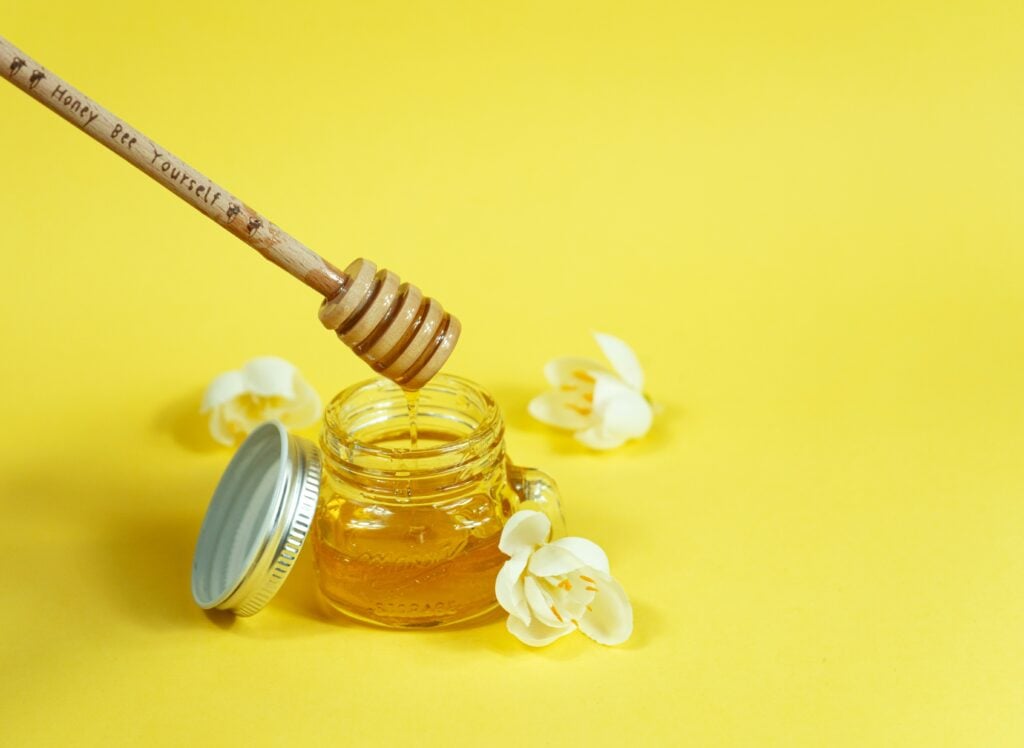
Yes, you are seeing Winnie-the-Pooh. Why, you say? Because you said, it’s a good day. Honey — a pot to find. Nothing else is on his mind. Life’s encounters along the way. Always there will be flowers for the bees and honey for you.
Thank you for listening.
I smiled. I didn’t fully understand it. But it made me happy, which I have come to recognize as its own kind of knowing.
— — —
Later that day, my son came by after work to pick up his dog. He leafed through the newspaper my husband had brought in and left it on the kitchen table before he headed home. At two forty-five I came downstairs for a late lunch and sat down across from it.
I am a headlines reader. I picked up each section and glanced at the cover. When I reached the last one — the opinion section — I stopped.
Taking up the entire top half of the front page, in full color, was Winnie-the-Pooh. He and his friends, large and unmistakable. And just at the fold, the title:
The Triumph of Winnie-the-Pooh.
I said out loud: No way!
— — —
The article, as it turned out, was about AA Milne — the man who created Pooh — and why we keep returning to him. According to the article, Milne came home from the First World War broken. He had witnessed horrors he couldn’t unsee and later written propaganda that made him, in his own words, almost physically sick. He suffered what they called shell shock then and what we recognize now as PTSD, or as the author stated, the moral injury of trauma. He tried to warn the world and found no audience. He became depressed and lost.
And then he turned toward his little boy.
Through his son’s innocence — through toys and imagination and a forest near their country home — Milne found his way back. He didn’t fight his way back. He played his way back. He created the Hundred Acre Wood, and in doing so healed himself, and gave the world something it has been returning to ever since.
Because we keep needing it.
As the author of the article put it: through the lives of children, adults can find escape from the traumas of life. They provide a window into the joy that is possible. They impart hope that life can begin again, fresh and unspoiled.
And at the bottom of the piece, a single quiet line: We all need that Hundred Acre Wood in our own lives.
— — —
I had pulled a card from an angel tarot deck several days before — the Six of Cups. Two children facing one another, exchanging gifts. I had used it for other writing and thought that morning it had given what it came to give. I opened the box, set it face up, paused for a moment, and said quietly — if I need you again, they’ll let me know — and put it away.
The first words on that card are these: Children or Childhood . Followed by Embracing your inner child.
I didn’t see the connection when I put the card away. I see it now.
— — —
Winnie-the-Pooh is not a complicated soul. He doesn’t strategize or protect or barricade. He wakes up thinking about honey and walks toward it with complete trust that it will be there. He notices the flowers and the bees. He enjoys his friends. He is present to exactly what is directly in front of him, and that presence is itself the wisdom.
He is the inner child who never lost faith in the abundance of small things.
And in a morning that began with today is a good day — not a declaration of certainty, just a gentle decision, a choice of frequency — that is exactly who showed up. Warm, playful, in full color. Saying hello.
The angels, it seems, have a sense of humor. And excellent timing.

— — —
I couldn’t have received this a month ago. I know that now. I was holding wire and zip ties. I was scanning the roofline for rats. I was tired in a way that had closed something in me — not permanently, but enough. The frequency of battle and the frequency of helloooooo are not compatible.
But I sat down. I had my coffee. I asked the real question. I wrote the piece. And somewhere in the writing and the sitting and the gradual loosening of the grip — the hands opened.
And Winnie-the-Pooh walked in.
— — —
I should tell you something, because anything I write has to be fully true.
The day after I received that message, I was back at Pommy with a bottle of spicy horse spray — the kind my daughter buys to keep horses from chewing on things. I sprayed it on the trunk and up into the lower branches. I cut my finger on the spiky metal strips I had put up a week ago. The squirrel came back anyway and took two more pomegranates, for a total of four that day. I even thought about the bag of squirrel food I had purchased a few seasons ago and never used — it looks like bird seed — and considered throwing it over the fence into the creek, hoping they might prefer that to my pomegranates. Instead, I got the cayenne powder and sprinkled it around the base of the tree, on the soil, on the trunks.
Then I came inside. And I stopped.
My daughter had read this piece. She watched me do all of it. Later in the afternoon I said to her — it’s a little funny, isn’t it? Here I am writing about open hands and receiving honey, and I’m out there sprinkling cayenne around my tree.
She said, Yeah, I wasn’t really going to say anything, but since you said it.
I laughed.
She replied, Oh bother. — just like Pooh. And we both laughed.
I don’t love the squirrels. I still feel mildly frustrated. I still ask myself how many pomegranates will be left for me by November, when they’re finally ripe. At this rate, honestly, there may be none. I know that’s the pessimist talking, and I don’t let myself live there for long. But I acknowledge it. It could be the way it works out.
What changed is not that I have made peace with all of it. What changed is that I came inside. I stopped. I laughed with my daughter. And somewhere in that laughter was the same frequency as the morning before — something light, something that doesn’t grip too hard. The open hands are not a permanent achievement. They are a choice I keep making, imperfectly, in between the cayenne and the spiky things.
— — —
Milne found his Hundred Acre Wood in his son’s nursery, in the toys on the floor, in a forest near home. He didn’t have to go far. The joy was close. It was waiting for him to be available to it.
Yours is close too. It may already have a name.
Mine is called Pommy.
— — —
What is your Hundred Acre Wood? And what might be waiting to say hello?